
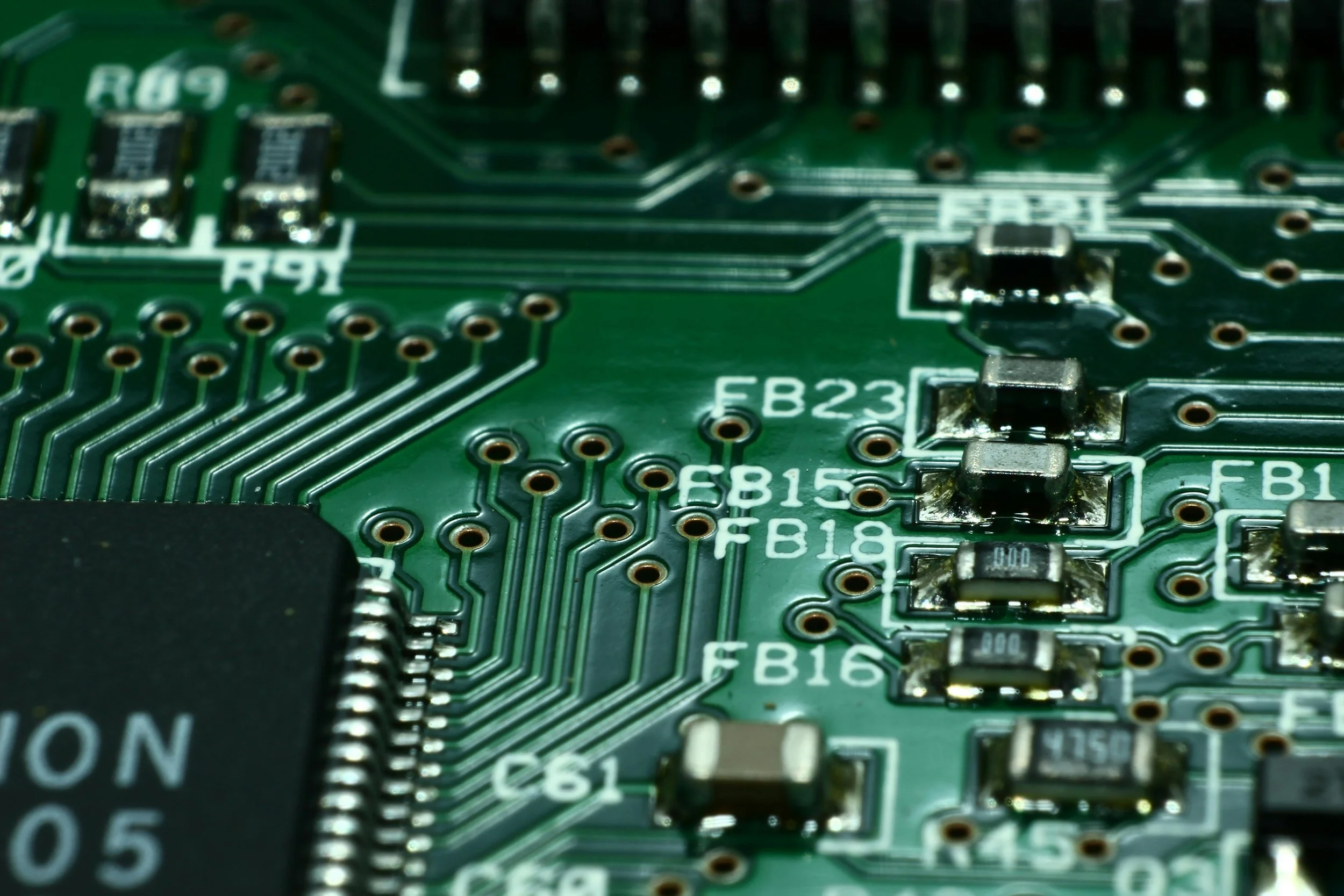
When developing a new electronic product, one of the most important manufacturing decisions is choosing between Surface Mount Technology (SMT) and Through-Hole Technology (THT). Both methods are widely used in PCB circuit board assembly, but they serve different purposes and offer distinct advantages depending on the application.
Understanding the differences between through hole and surface mount technology can help improve product performance, manufacturing efficiency, reliability and overall project costs.
In this guide, we compare SMT technology and through-hole assembly, explain where each method is most effective, and help you determine the best approach for your next PCB project.
What is Surface Mount Technology (SMT)?
Surface Mount Technology, commonly referred to as SMT technology, is a method of assembling electronic components directly onto the surface of a printed circuit board (PCB).
Unlike traditional through-hole methods, SMT electronic components do not require holes to be drilled through the board. Instead, components are placed onto solder pads and secured during the reflow soldering process.
Modern PCB manufacturing relies heavily on SMT due to its ability to support:
Smaller electronic devices
Higher component densities
Faster production speeds
Automated assembly processes
Reduced manufacturing costs
Today, SMT technology is the dominant assembly method used in industries ranging from consumer electronics and telecommunications to automotive and medical devices.
What is Through-Hole Technology (THT)?
Through-Hole Technology (THT) is a more traditional assembly method where component leads are inserted through drilled holes in the PCB and soldered to pads on the opposite side.
Through hole PCB assembly has been used for decades and remains an important manufacturing process for applications that require strong mechanical connections or high durability.
The through hole assembly process is particularly suited to:
High-power applications
Connectors and sockets
Transformers
Heavy components
Products exposed to vibration or mechanical stress
Although SMT has become the preferred option for many designs, THT PCB assembly continues to play an important role in specialised electronic products.
SMT vs Through-Hole Assembly: The Key Differences
Component Mounting Method
The biggest difference between SMT and THT lies in how components are attached to the PCB.
In SMT assembly, components are mounted directly onto the board surface using solder paste and automated placement equipment.
In through-hole assembly, component leads pass through drilled holes before being soldered into place.
Because SMT eliminates the need for drilling thousands of component holes, production can be significantly faster and more efficient.
PCB Design Flexibility
SMT technology allows designers to place components on both sides of a PCB, making it possible to create highly compact and complex circuit layouts.
Through-hole designs require more board space because each component occupies both a surface area and a drilled hole location.
For products where space is limited, SMT often provides a considerable advantage.
Manufacturing Speed
Modern SMT production lines use advanced automation including high-speed SMT pick & place machines capable of placing thousands of components per hour with exceptional accuracy.
This automated approach allows manufacturers to produce large volumes quickly while maintaining consistent quality.
Through-hole assembly often involves more manual intervention, making it slower and more labour-intensive.
Production Costs
For medium to high-volume production runs, SMT generally offers lower manufacturing costs.
This is largely due to:
Faster assembly speeds
Greater automation
Reduced material usage
Smaller PCB sizes
While through hole PCB assembly may be necessary for certain applications, it can increase manufacturing costs due to additional drilling, handling and labour requirements.
Mechanical Strength
One area where through-hole assembly continues to excel is mechanical durability.
Because component leads pass through the board itself, the resulting connection is extremely robust.
This makes THT ideal for components that experience:
Frequent plugging and unplugging
Physical stress
Vibration
High operating loads
Connectors, switches and large capacitors are commonly assembled using THT for this reason.
When Should You Choose SMT?
SMT is often the preferred choice when designing modern electronic products that require compact layouts, high-volume production and cost efficiency.
SMT may be the best option when:
Space is limited
Production volumes are high
Components are small and lightweight
Cost reduction is a priority
Automated manufacturing is required
Many modern consumer devices, industrial control systems and communication products are manufactured almost entirely using SMT electronic components.
The SMT soldering process also supports excellent consistency and repeatability, helping manufacturers maintain high quality standards across large production runs.
When Should You Choose Through-Hole Assembly?
While SMT dominates many sectors, through-hole assembly remains essential in applications where reliability under physical stress is critical.
THT may be the best option when:
Components are heavy
High voltages or currents are present
Connectors require extra strength
Products experience significant vibration
Long-term durability is a priority
Industries such as aerospace, defence, industrial equipment and power electronics often continue to use through-hole PCB assembly for critical components.
What About Hybrid PCB Assembly?
In many cases, the best solution is not choosing between SMT and THT but combining both technologies.
A hybrid SMT THT process allows manufacturers to utilise the strengths of each assembly method within a single design.
For example:
SMT components can be used for integrated circuits, resistors and capacitors.
Through-hole components can be used for connectors, transformers and power components.
This approach delivers the compactness and efficiency of SMT alongside the mechanical strength of through-hole assembly.
Many modern products use this hybrid approach to achieve optimal performance and reliability.
Can Existing Through-Hole Designs Be Converted to SMT?
Many businesses with legacy products explore converting older THT designs to SMT.
The process of moving from SMD to THT or redesigning THT products for SMT can offer several benefits, including:
Reduced manufacturing costs
Smaller PCB sizes
Improved production scalability
Faster assembly times
However, component selection, thermal requirements and mechanical considerations must all be carefully evaluated during the redesign process.
Working with an experienced PCB assembly partner can help determine whether a conversion is practical and cost-effective.
Choosing the Right Assembly Method for Your PCB Project
There is no single solution that suits every PCB design.
SMT technology offers exceptional speed, efficiency and miniaturisation, making it the preferred choice for most modern electronic products.
Through-hole assembly provides superior mechanical strength and durability, making it ideal for demanding environments and specific component types.
For many products, a hybrid SMT THT process delivers the best balance of performance, reliability and manufacturing efficiency.
The right choice ultimately depends on your product requirements, operating environment, budget and production volumes.
Expert PCB Circuit Board Assembly Support
Choosing between SMT and through-hole assembly is only one part of a successful electronics manufacturing project. Design considerations, component sourcing, testing requirements and production volumes all influence the final solution.
With over 30 years of experience in PCB circuit board assembly, First Choice Assembly provides complete manufacturing support, including SMT assembly, THT PCB assembly, hybrid builds, prototyping, testing and full product manufacture.
Whether you're developing a new electronic product or refining an existing design, selecting the right assembly process can help improve performance, reliability and long-term manufacturing efficiency.

